Welcome to the Bay Engineers Blog
Arc Flash Study: Requirements
What Are the Requirements for An Arc Flash Study?
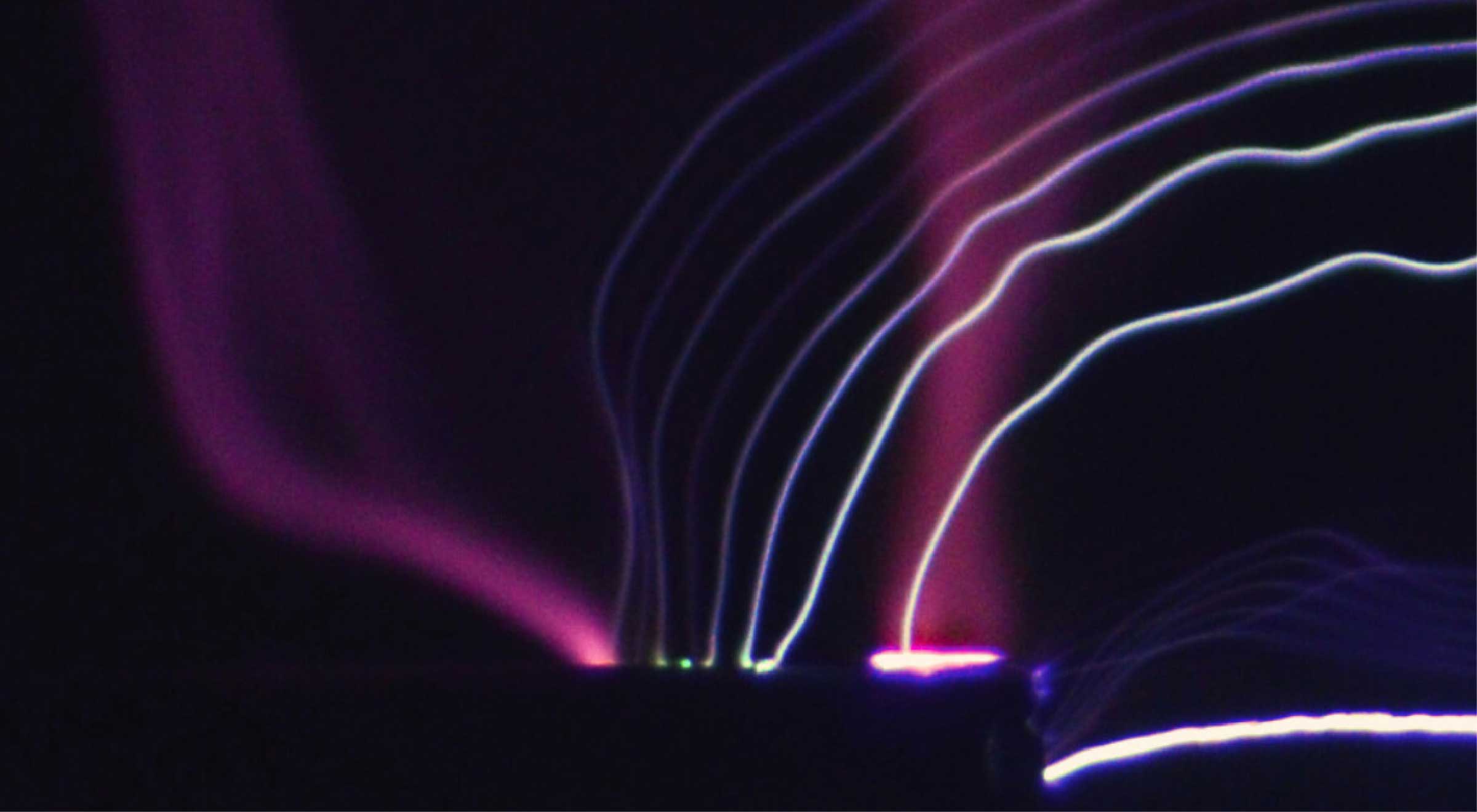
Arc flash hazards are one of the most serious risks in electrical systems. Unlike a typical short circuit, an arc flash releases an explosive burst of thermal energy that can exceed 35,000°F — hotter than the surface of the sun. The force can cause severe burns, blindness, hearing damage, and fatalities within fractions of a second.
An arc flash study is the formal engineering process used to identify, quantify, and label that hazard. At minimum, a compliant study requires accurate modeling of the facility’s electrical distribution system, including utility fault current data, transformer impedance, conductor lengths, breaker and fuse settings, and equipment configurations. Engineers must perform a short circuit analysis to determine available fault current, a protective device coordination study to determine clearing times, and then calculate incident energy using the IEEE 1584 methodology. The final deliverables typically include updated single-line diagrams, incident energy calculations at each piece of equipment, arc flash boundaries, PPE requirements, and properly formatted equipment labels installed in the field. Without these elements, a study is incomplete — and potentially indefensible under inspection.
To understand how arc flash compliance truly works in practice, we can look at how engineering standards, building codes, and enforcement agencies intersect — and how experienced engineers approach the work.
The Engineering Foundation: IEEE 1584
At the core of every legitimate arc flash study is IEEE 1584, the industry standard for calculating incident energy.
IEEE 1584 provides the mathematical framework engineers use to determine how much energy could be released during an arc flash event. It requires modeling of available fault current, system voltage, equipment configuration, and protective device clearing times. These inputs determine the incident energy level — measured in calories per square centimeter — and define the arc flash boundary and required personal protective equipment (PPE).
As electrical engineer Mozart Faizi explains:
“IEEE is kind of the guideline. It has been. But if they change something and they insist on it, then you have to take care of it.”
In other words, IEEE 1584 is not optional theory — it is the technical backbone of any defensible arc flash analysis. Without it,
there is no reliable method for calculating hazard levels.
The Legal Framework: NEC and NFPA 70E
While IEEE provides the calculation method, the legal requirement to perform arc flash labeling and hazard analysis stems from the National Electrical Code (NEC), published by the National Fire Protection Association.
The NEC establishes minimum installation requirements across the United States. Over time, it has increasingly emphasized arc flash labeling. Earlier editions of the NEC did not strongly enforce labeling, but that has changed.
“They created a section for that. Every year it’s becoming more stringent.”
— Mozart Faizi
Individual states may adopt stricter versions of the NEC. California, for example, enforces its own California Electrical Code based on NEC but often with additional requirements.
“You just don’t want to be below the National Electrical Code. And in California, you don’t want to be below California Electrical Code.”
— Mozart Faizi
Alongside NEC is NFPA 70E, also from the National Fire Protection Association, which governs electrical safety in the workplace. While NEC focuses on installation, NFPA 70E defines how workers must be protected when interacting with energized equipment. It sets standards for PPE, energized work permits, and approach boundaries — all of which depend on accurate arc flash calculations.
OSHA and Enforcement
Compliance is not just theoretical. The Occupational Safety and Health Administration enforces workplace safety standards.
Mozart notes a turning point in enforcement:
“Up to 2018, it wasn’t really required. They wanted to see it. But after 2018 — it’s mandated. Required.”
Today, employers are legally responsible for protecting workers from arc flash hazards. OSHA can cite facilities under the General Duty Clause if adequate hazard analysis has not been performed.
For new construction, there is little room for interpretation.
“New buildings, they never give a pass ticket. You have to do it. You have to get an arc flash label and everything else.”
— Mozart Faizi
Existing buildings can be more nuanced. Minor modifications may not trigger full compliance updates, but major service upgrades or distribution changes often do.
“If the building is existing and you go work in one office, that doesn’t mean it’s new. Unless because of that work you’re adding a section to your distribution.”
— Mozart Faizi
What a Real Arc Flash Study Actually Involves
One of the most misunderstood aspects of arc flash compliance is the engineering effort required.
Arc flash analysis is not simply placing labels on panels. It is part of a comprehensive power system evaluation that includes short circuit analysis and protective device coordination.
Mozart speaks candidly about common shortcuts in the industry:
“A lot of people look for cheap contractors and say, ‘I want an arc flash study.’ He’s got some spreadsheets, puts some numbers in, prints labels. No. There’s no such thing. You have to calculate it.”
— Mozart Faizi
A proper study requires modeling the entire electrical distribution system. Engineers must build a digital representation of the facility in specialized software, incorporating transformer data, breaker trip curves, generator contributions, and even utility-provided fault current values.
The accuracy of the results depends entirely on the accuracy of the system documentation. Panel schedules, voltage levels, main breaker ratings, and conductor lengths all affect clearing times and incident energy levels.
As Mozart explains:
“There are three important things in the panel: capacity, voltage, and main breaker.”
— Mozart Faizi
Improper coordination between breakers can significantly impact arc duration and energy release.
“Since I do coordination study, I know the consequences of having two breakers behind each other.”
— Mozart Faizi
When protective devices are not properly coordinated, a fault may not clear quickly — increasing incident energy and worker danger.
Why Complexity Changes Everything
Different facilities call for different considerations. Here are how the most common site arc flash studies differ.
Office Buildings Arc Flash Studies
In a typical commercial office building, the electrical distribution is relatively straightforward. Power comes in at 480V, passes through transformers, and feeds standard panels.
“Office buildings don’t need generators, they don’t need that much. It’s usually a simple switchboard, transformers, then low-voltage panels.”
— Mozart Faizi
These systems are simpler to model and typically less expensive to study.
Hospital Arc Flash Studies
Hospitals introduce a dramatically higher level of complexity. They require redundant systems, emergency generators, multiple transfer switches, and strict regulatory oversight.
Life-safety loads cannot lose power. That requirement impacts how systems are designed — and how arc flash studies must be modeled.
Data Center Arc Flash Studies
Data centers present their own challenges. They rely on UPS systems, parallel generators, and redundant A/B distribution paths.
Arc flash modeling must account for generator fault contribution, UPS behavior, and parallel power sources — all of which increase complexity and engineering time.
Final Thoughts
Arc flash compliance today is a combination of engineering precision, code compliance, and worker safety enforcement. It requires accurate modeling, proper coordination studies, adherence to IEEE 1584, compliance with NEC and NFPA 70E, and OSHA-aligned worker protection.
As Mozart emphasizes:
“You can’t take a boilerplate approach to arc flash studies. Each one requires careful, precise analysis and the benefits result in better power distribution and risk prevention. You have to think about it.”
— Mozart Faizi
In simple facilities, arc flash studies are manageable and straightforward. In mission-critical environments, they become highly technical engineering exercises where accuracy, coordination, and regulatory knowledge directly impact both safety and success.
Contact us for a quote on an arc flash study today!
Safety Compliance
Protect Equipment
Improve Reliability
Eliminate Downtime
Our Clients





















We turn to Bay Engineers for our most demanding jobs because we know that the thoroughness of their designs, their ability to meet short deadlines, and their creativity in solving problems that arise in construction are at the highest level.
–EUGENE H. SAKAI, AIA, STUDIO S SQUARED ARCHITECTURE
Let Bay Engineers Take Care of Your
Power Study
With over 60 years of combined industry expertise, Bay Engineers offers comprehensive electrical engineering services, and specializes in arc flash hazard analysis.
Conducting an Power System Evaluation demands expertise in power analysis and arc flash analysis, skills possessed by seasoned electrical engineers. Only professionals versed in industry standards like IEEE 1584 and NFPA 70E can ensure accurate data collection and analysis, safeguarding against potential hazards. Don’t risk incomplete or outdated assessments; rely on our team of professionals who prioritize your safety and compliance.
Our team conducts thorough on-site assessments to prioritize facility safety and operational efficiency, ensuring compliance with industry standards.